Albania Public Holidays Travel Tips: Survival Guide for Tourists (2026)
This explicit guide on Albania public holidays travel tips focuses entirely on how official days off affect closures, transport prices, and hotel availability.
Planning a trip around national celebrations can either be a magical cultural experience or a logistical nightmare.
If you want to protect your budget and avoid locked doors during holiday weekends, here are the hard facts and direct booking solutions you need.
Essential Travel Resources
Before you head out, sort your travel essentials to secure the best rates:
- Car Rental: Compare local deals and prices on DiscoverCars.
- Excursions & Guides: Book top excursions and local guides on GetYourGuide.
- Mobile Internet: Instant internet connection upon arrival via Yesim eSIM.
- Where to Stay: Find top-rated hotels and apartments on Expedia.
- Travel Insurance: Protect your trips with SafetyWing.
The Calendar: Smart Albania Public Holidays Travel Tips

When an official Albanian holiday falls on a Saturday or Sunday, the non-working day automatically moves to the following Monday (and sometimes Tuesday).
For tourists, this creates an unexpected 3-day or 4-day closure trap.
Use this clean, mobile-friendly schedule to check if your travel dates hit a major shutdown block in 2026:
| 2026 Holiday Dates | National Day Off | Logistical Impact Level |
| Jan 1–2 | New Year’s Day | Severe: 90% of businesses closed |
| March 14 (Mon 16) | Summer Day | Medium: High coastal hotel demand |
| March 20 | Eid al-Fitr (Bajram) | High: Local banks & state offices shut |
| April 5–6 / 12–13 | Catholic & Orthodox Easter | High: Extreme traffic near Saranda/Vlora |
| May 27 | Kurban Bajram | Medium: Markets close early |
| Nov 28–29 (Mon 30) | Independence & Liberation | Severe: Parades, heavy road closures |
Red Days Closures: How to Protect Your Cash and Logistics

The biggest mistake travelers make is assuming standard tourist infrastructure works 24/7.
Here are critical Albania public holidays travel tips to protect your wallet:
-
The ATM and Bank Lockout: Official state banks close completely on red days. If your credit card gets swallowed or flagged by an ATM, you cannot get it back until Tuesday morning. Always exchange cash into Lek beforehand. Read our verified Albania currency tourist guide to learn how to dodge local bank fees.
-
Restaurant and Supermarket Reality: In major holiday hubs like Tirana or along the best beaches in Southern Albania, private restaurants and tourist supermarkets stay open. However, family-run bakeries, pharmacies, and local street markets will close completely.
The Transport Trap: Why You Need to Rent a Car Early

Public transport in Albania (the local furgon minibuses) operates on an informal system. On national holidays, drivers stay home with their families.
Driving your own rental vehicle is the only way to escape holiday transport delays.
- The Intercity Bus Problem: Bus schedules cut down by 50–70% on holiday weekends. If you rely on public buses to get from Tirana to coastal towns, you risk being stranded at the terminal.
- The Price Spike: Taxi drivers double their rates for foreigners on days like New Year’s Eve or Independence Day.
🔎 The Solution: Do not rely on local drivers. Secure an affordable rental vehicle with full insurance coverage via DiscoverCars weeks before your landing date.
Packing the Hot Spots: Independence Day & Easter Crowds

National holidays trigger massive domestic tourism.
Albanians love celebrating with family, causing massive road jams and fully booked coastal zones.
-
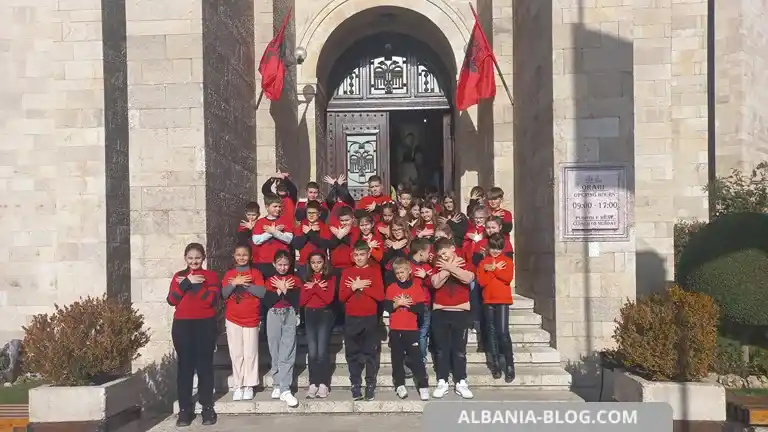
November 28–29 (Flag Day): Vlora and Tirana become fully packed. Streets turn into pedestrian parade zones, and driving through city centers is impossible. If you plan to watch the national folk dances at Flag Square, book a hotel within walking distance on Expedia.
-
Easter Weekends: Coastal routes leading toward Saranda, the Blue Eye Spring, and historic landmarks like Lekuresi Castle face heavy holiday traffic jams. Plan your drives for early morning to beat the local crowds.
Unofficial Working Holidays: What Changes for Tourists?

On unofficial holidays like March 8 (Women’s Day) or June 1 (Children’s Day), everything stays legally open, but local routines change.
-
March 8 Reality: Cafes and restaurants in the different cities of Albania get completely overwhelmed by local celebrations. If you want a seaside table for dinner, you must call and reserve it 2–3 days in advance.
-
June 1 Reality: Main public squares are closed off for children’s concert stages, which means central parking spaces become completely unavailable.
⚠️ Note: On March 8th, banks open 1-2 hours later than usual. The reason is simple: the tradition of congratulating women on International Women’s Day is still alive in Albania.
FAQ: Albania Public Holidays Travel Tips
Do I need to pay higher hotel rates during holidays?
Yes. Prices for boutique hotels along the Ionian coast can jump by 30–40% during long holiday weekends due to high demand from domestic travelers. Always book early.
Can I pay with Euros when local banks are closed?
While many private hotels and car rentals accept physical Euros, street vendors and public transit hubs require local Lek. Keep a stash of cash Lek handy at all times.
Final Strategy for a Smooth Holiday Trip
Navigating the local festival calendar is completely stress-free if you prepare your logistics in advance.
🔎 Take control of your holiday itinerary now:
- Skip the reduced bus schedules and rent a car on DiscoverCars.
- Lock in prime central stays before holiday sellouts on Expedia.
👉 Read our master manual: Albania on the map to perfectly coordinate your travel insurance, budget, and route before you fly!
Shorts: Independence Day Celebrations in Vlora
Shot date: November 28, 2025.
See the colorful street performances in Vlora for yourself:
👉 Subscribe to the Life in Albania YouTube Channel for direct price updates, driving conditions, and real-time holiday travel hacks!
Author content.
If this article helped you, you can support the author with a coffee.