Sarisalltik Trail Guide: Hiking the Mountain Route Above Kruja
Looking for the ultimate outdoor adventure in Albania? The rugged Sarisalltik trail is a magnificent hidden gem.
This historic mountain path climbs directly above the ancient town of Kruja. It leads pilgrims and adventurers up to a sacred Bektashi cave temple.
My experience: However, mountain weather is highly unpredictable. I personally tackled this trek on November 26, 2024. Due to a sudden late-autumn storm, I had to turn back early.
Here is my honest, mobile-friendly guide to conquering this panoramic trail safely.
Essential Travel Resources
Before you head out, sort your travel essentials to secure the best rates:
- Car Rental: Compare local deals and prices on DiscoverCars.
- Excursions & Guides: Book top excursions and local guides on GetYourGuide.
- Mobile Internet: Instant internet connection upon arrival via Yesim eSIM.
- Where to Stay: Find top-rated hotels and apartments on Expedia.
- Travel Insurance: Protect your trips with SafetyWing.
History of the Sarisalltik Mountain Route
The path has deep spiritual roots. Saint Sarisalltik was a famous Bektashi religious figure. He arrived in Albania around 1263.
In 1325, he reportedly visited a secret cave on Mount Kruja. For centuries, devout Bektashi pilgrims ascended this exact mountain route on foot. Thanks to their continuous efforts, the path remains clear today.
Legend says even the great national hero, Skanderbeg, used this secret pass. It allowed his troops to scout Ottoman movements from the highest peak.
Finding the Best Sarisalltik Trailhead
The Sarisalltik trail begins just outside the main tourist zone of Kruja. You have two distinct options for starting your trek.
A signpost by the main road points toward the steep mountain trail entrance.
A sign for Sarisaltik on the road in the center of Kruja

There are signs for Sarisaltik along the roads in Kruja.
I took a photo of a sign near a fork in the road in the center of Kruja. Follow the road and you’ll reach the trailhead.
📍 Coordinates of the road junction: 41.510912, 19.793421
Option 1: The Main Road Sign

The official starting point features a clear roadside arrow pointing upward.
📍 Main Entrance Coordinates: 41.514908, 19.794025
⚠️ Warning: This official route is highly frustrating. You must climb a slippery dirt hill next to a private fence with loudly barking dogs.
Option 2: The Bunker Alternative (Recommended)

Continue walking past the sign for another 100 meters. Look for an old concrete military bunker near the blue bus stop.
The alternative start of the route follows a much gentler dirt road by an old bunker.
Turn onto the flat dirt road right here. This adds 200 meters to your total distance. However, it completely avoids steep weeds, loose scree, and territorial dogs.
📍 Bunker Turn Coordinates: 41.515713, 19.793413
What to Expect During the Steep Ascent
Once you pass the final houses, the real climb begins. The average incline of the slope is a punishing 45 to 50 degrees.
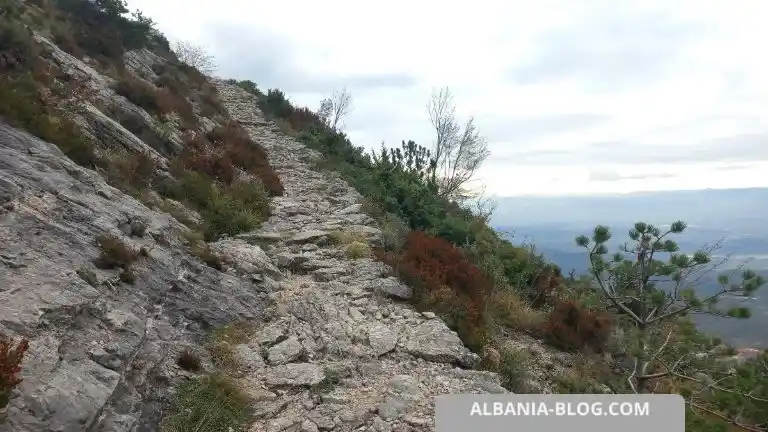
The mountain path features stone steps laid out by local pilgrims over the centuries.
Look for the Secret Stone Steps

The initial path forces you onto a highly unstable gravel embankment. Your shoes will slide backward constantly.
Pro Tip: Walk roughly 30 meters up the embankment, then look immediately to your left. Someone built hidden stone steps out of compacted gravel. Finding this stepped path makes the cardio workout much safer.
Useful Landmarks

Keep an eye out for a water well with a metal hatch and a curved pipe. If you see this well next to the path, you are on the correct route.
Sweeping Panoramic Views Over Kruja

As you push higher, the trail crosses several flat rocky outcrops. These natural stone balconies make perfect resting spots.
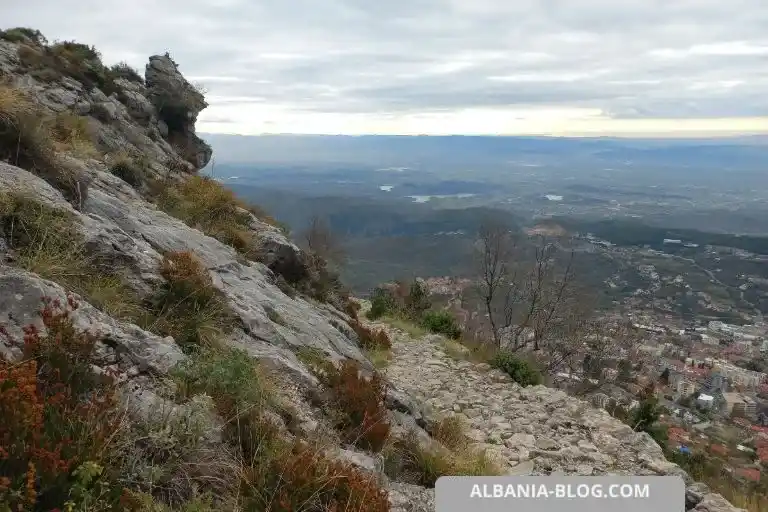
The rugged trail runs directly along exposed cliffs, offering clear views of Kruja Castle below.
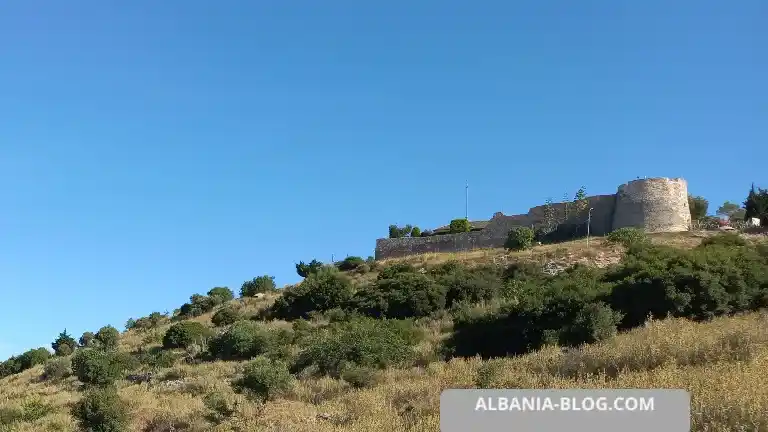
From these viewpoints, you get an unmatched look at Kruja Castle. On perfectly clear days, you can see past Tirana all the way to the Adriatic Sea.
⚠️ Safety Warning: The Sarisalltik trail has zero safety railings. The path narrows to just 0.5 meters in some sections. It runs right along sheer vertical drop-offs. Watch your step carefully while taking photos.
High-Altitude Risks: Why I Had to Turn Back

The mountain peak sits at roughly 1,100 meters above sea level. The air gets noticeably thinner and colder the higher you climb.
During my trek on November 26, the morning started at a sunny 18°C. I was wearing a simple t-shirt. However, by 1:30 PM, the mountain environment changed instantly.
High-altitude weather can deteriorate in minutes, bringing freezing fog and high winds.
A piercing freezing wind picked up. Thick, dark clouds rolled in, and my breath turned to vapor. Within minutes, dense alpine fog completely swallowed the peak.
Because I was carrying a heavy backpack, fatigue set in quickly. I made the smart choice to abort the mission and descend immediately.
The Golden Rule of Mountaineering: The peak is optional, but getting back down safely is mandatory. Never risk your life for a photo.
Crucial Hiking Tips for Your Trip

-
Travel Light: Leave heavy luggage at your hotel. Carry only water and basic layers.
-
Start Early: In autumn and winter, the sun sets around 4:00 PM. Start your hike before 10:00 AM.
-
Check the Forecast: Mountain storms in Albania are violent and unpredictable.
-
Know Your Limits: Descending takes only one-third of your ascent time. If the weather turns, drop down immediately.
👉 Additional materials for travelers:
- Need a backup plan? If the weather turns bad, you can actually drive to the top instead. Read our guide to the Sarisalltik Road from Kruja — The Best Mountain Views in Albania.
- Planning your logistics? Read our detailed guide on How to Get to Kruja from Tirana — 2026 Transport Guide to arrange your rental car or local minibus drop-off.
- Discover more routes: Explore our comprehensive list of the best Albania Travel Routes 2026 — Your Complete Navigation Guide
Frequently Asked Questions (FAQ)
How long does it take to hike the Sarisalltik trail?
The trail is roughly 2 km long. It takes about 1.5 hours of steep uphill walking to reach the summit, and 30 minutes to descend.
Is the trail difficult for beginners?
Yes. The incline is 45-50 degrees with many high stone steps. It requires decent physical fitness and proper footwear.
Is the Sarisalltik trail free to hike?
Yes, there are no entrance fees or permits required to hike the mountain.
Shorts: Sarisalltik Mountain Trail Above Kruja
Shot date: November 26, 2024.
It shows the exact trail conditions, the narrowing pine bushes, and the sudden clouds rolling over the cliffs.
👉 Subscribe to our channel Life in Albania for real travel price reviews and up-to-date information about Albania!
Author content.
If this article helped you, you can support the author with a coffee.